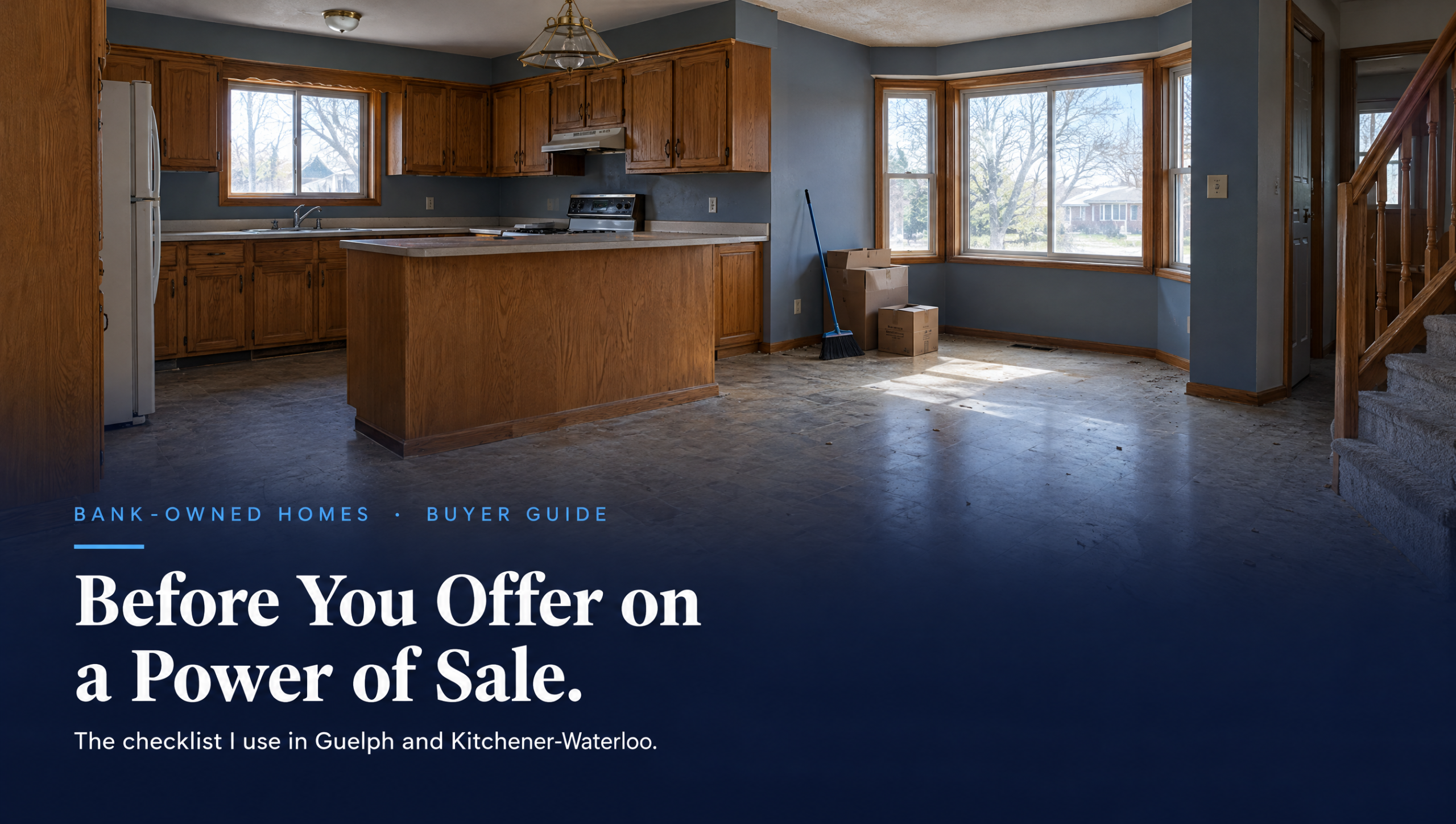
Buyer Guide
Before You Offer on
a Power of Sale.
The Checklist I Use.
Buying a power of sale in Guelph or Kitchener-Waterloo is different from a normal purchase. Most of your protection comes from the homework you do before you write the offer. Here’s the checklist I walk my buyers through.
Sean Baker
·
Buyer Guide
·
8 min read
In a normal sale, the seller lived in the house. They fill in the paperwork, they answer questions, and they make promises in the offer.
In a power of sale, the seller is the lender. The bank has never lived there. It knows almost nothing about the home, so it promises almost nothing. That shifts the risk onto you.
The good news: most of that risk can be managed. You just have to do the work up front.
Want bank sales sent to you? Every week I send the power of sale, estate and power of attorney listings across Waterloo Region and Wellington County.
Join Sean’s Shortlist
✅ The Checklist for Buying a Power of Sale in Guelph
1. Lock in firm financing
Many lenders want a clean, firm offer with no financing condition. A pre-approval is not enough. Talk to your mortgage broker early and get as close to a firm commitment as you can.
Ask your lender if they’re comfortable with a power of sale. Some want more information about the home’s condition.
2. Walk the property in person
This sounds obvious. You’d be surprised. One Ontario real estate lawyer shared a story about a buyer who bought a power of sale without walking through it. After closing, they found the furnace and all the electrical wiring had been ripped out.
Walk every room. Open the panel. Look at the furnace, the roof and the foundation. Bring a contractor if you can.
3. Book an inspection early, if you’re allowed one
Some lenders allow a home inspection condition. Many don’t. If you can’t have a condition, inspect before you offer. It costs a few hundred dollars and can save you tens of thousands.
4. Get your lawyer to run the searches
Before you firm up, a real estate lawyer can search title, check for work orders from the city, and look for debts registered against the property.
They can also run a search for liens on chattels. That tells you if the fridge or the furnace is still being financed by someone else.
5. Check what’s rented
Look at the hot water tank, furnace and water softener for a rental sticker. The lender won’t know what’s rented. If it is rented, you’ll take over that contract.
6. Ask about utilities and taxes
Owners who stop paying the mortgage often stop paying other bills too. Some lender schedules say they won’t adjust for water or sewer charges on closing. Ask your lawyer how unpaid bills could affect you.
7. Find out who lives there
A legal tenancy survives a power of sale. If there’s a tenant, you inherit them. If you want to move in, you’ll need to give proper notice and may need the Landlord and Tenant Board (LTB). That can take many months.
A boarder who shares a kitchen or bathroom with the owner is different. Ask your lawyer which one you’re dealing with.
8. Line up home insurance
Some insurers ask more questions about vacant or bank-sold homes. Get a quote before you offer, not the week of closing.
At a Glance: Before You Write the Offer
Financing
Firm commitment, not just pre-approval
Must
Walk-through
Every room, mechanicals, roof, basement
Must
Lawyer searches
Title, work orders, liens on chattels
Must
Rentals
Hot water tank, furnace, softener
Check
Occupants
Tenant, boarder or vacant
Check
Insurance
Quote in hand before you offer
Check
⚠️ Two Risks You Can’t Fully Remove
The owner can still redeem. Until closing, the owner can pay what they owe and stop the sale. It’s rare, but it happens. Don’t give notice on your rental or sell your current home without talking to your lawyer about timing.
The lender can push your closing. Many lender schedules let them extend the closing date, often by 60 to 90 days. Build that into your plans.
For a full walk-through of how power of sale works, read my buyer’s guide to power of sale homes in Guelph and Kitchener-Waterloo. For the difference between bank sales and other motivated sellers, see estate sales vs power of attorney sales vs power of sale.
🏁 The Bottom Line
Buying a power of sale in Guelph can be a smart move. But the protection you’d normally get from the seller isn’t there. You build it yourself with financing, searches, a walk-through and a good lawyer.
Do the homework first. Then make your offer with confidence.
This post is general information, not legal or financial advice. Every situation is different. Speak with a real estate lawyer before you sign anything.
🧭 Quick FAQ
Can I put conditions on a power of sale offer?
It depends on the lender. Some allow financing, inspection or status certificate conditions. Many want a clean, firm offer.
Should I get a home inspection on a power of sale?
Yes. If the lender won’t allow an inspection condition, inspect before you write the offer.
What searches should my lawyer do?
Title, work orders, executions and liens on chattels are a good start. Ask your lawyer what else makes sense for the property.
What happens if there’s a tenant?
The tenant stays when you buy. If you want to live there, you must follow the rules in Ontario’s Residential Tenancies Act, which can take months.
Can the sale fall through after I firm up?
Yes, in rare cases. The owner can pay off the debt and redeem the home before closing.
Buyer Guide
Looking at a power of sale right now?
Send me the listing. I’ll walk through it with you before you write a dollar.
Book a Consultation